Ingredients
Equipment
Method
- This method assumes you have your gluten-free sourdough starter in one glass jar and a second identical empty jar ready to use.
- Weigh your starter: Place the empty jar on a kitchen scale and tare it to 0 grams. Then place the jar with your starter on the scale to see the actual weight of your starter.
- Discard excess starter: Decide how much starter you want to keep. Remove the rest and save it as discard for later use.For this example, keep 50 grams of starter.Gluten Free Sourdough Starter
- Add flour: Tare the scale again, then add 50 grams of gluten-free flour (such as brown rice flour).Gluten Free Flour
- Add water: Add 50 grams of water.Filtered Water
- Stir until smooth: Stir well until there are no dry pockets of flour.
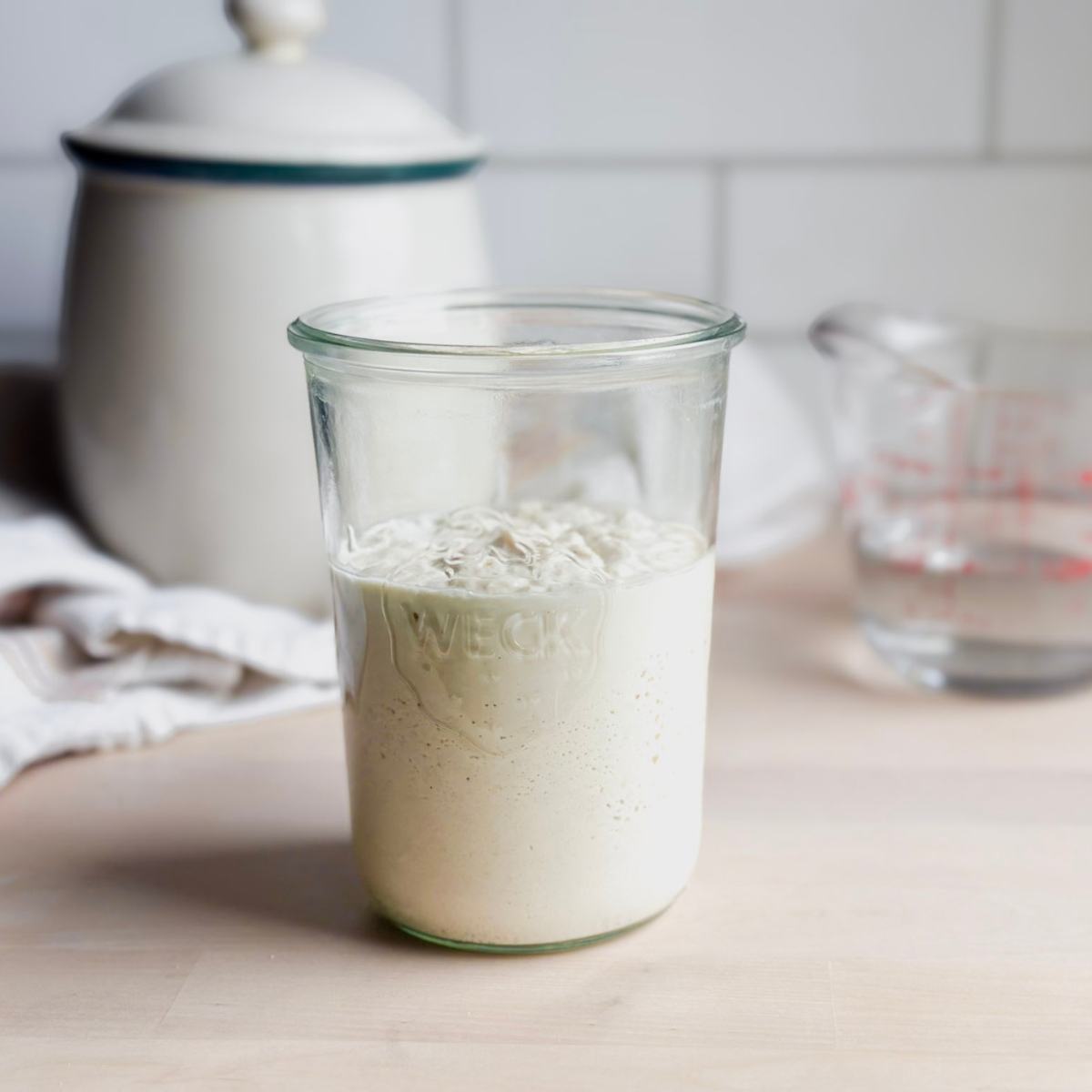
- Your starter should look like a thick batter and be easy to stir. If it feels too thick, add a few drops of water until it loosens slightly.
- The right consistency of a well hydrated starter is a thick, slow flow from the back of a spoon.
- Transfer to a clean jar: Pour your freshly fed starter into the clean jar.Try to keep the inside of the jar clean and free from streaks of starter to help prevent mold.
- Transferring your gluten free starter to a new jar after every feeding is best practice to help prevent mold growth.
- Cover and rest: Cover with a breathable lid, such as a paper towel or coffee filter secured with a rubber band.Place on the counter in a spot away from drafts and direct sunlight.
- Repeat daily: Feed your starter again in about 24 hours if keeping it at room temperature.
- Your starter is ready to use when it is bubbly, sligthly risen (don't expect it always to double in size) and at it's peak activity before it drops.
Notes
Refrigerator storage:
If storing your starter in the fridge, use a closed lid to prevent contamination. Feed it about once per week to keep it healthy. This works well if you bake less often or live in a warmer climate, where starters become more active and need more frequent feeding.Hydration tip for gluten-free starters:
Gluten-free flours absorb more water, so it’s important to go by the look and feel of your starter rather than strict ratios.Even when using a 1:1:1 feeding, you may need to add a little extra water. Your starter should be a thick, smooth batter that slowly flows off a spoon.
The exact amount can vary depending on the flour you use, as well as the temperature and humidity in your home.